Key Takeaways
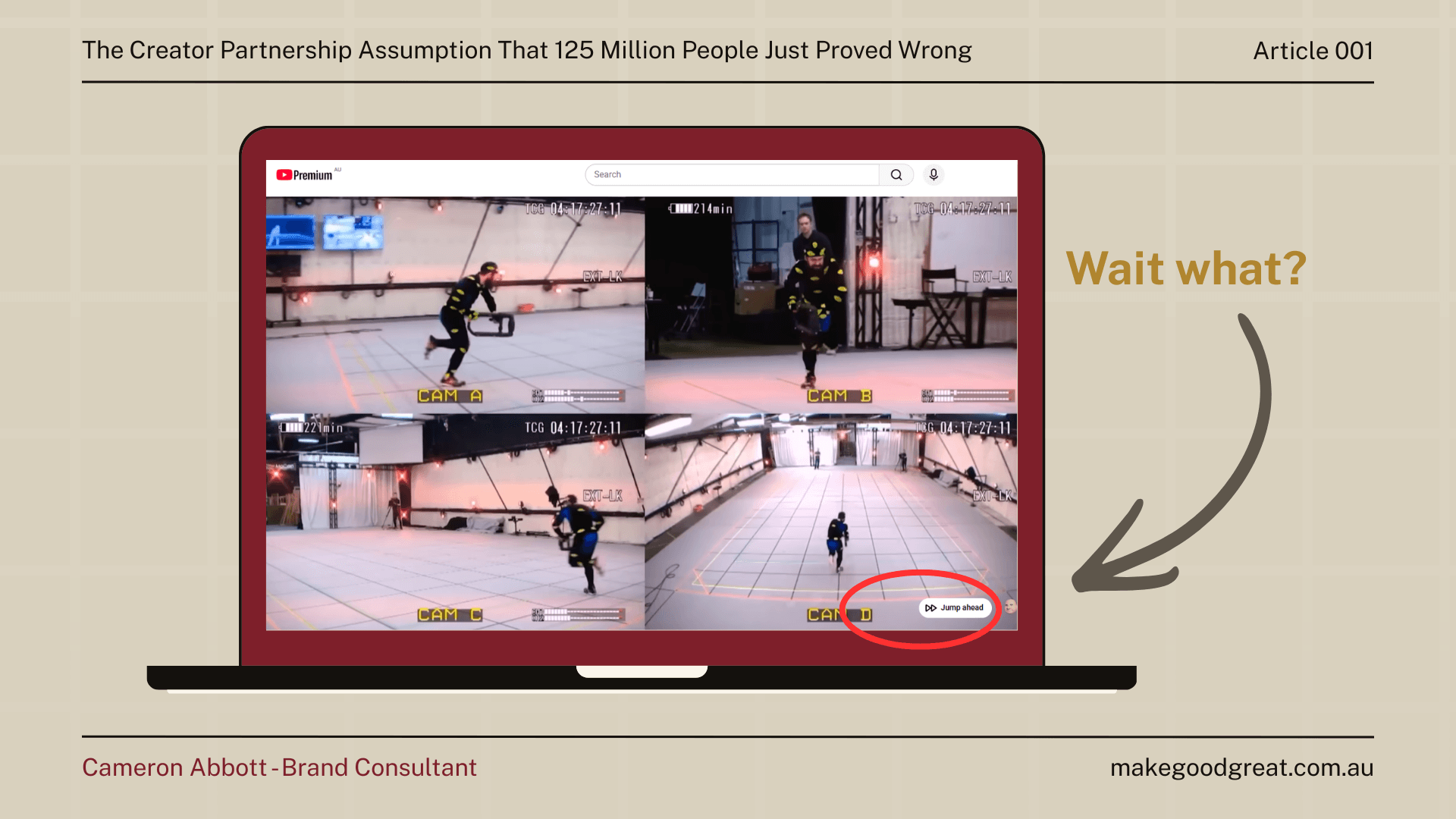
- YouTube Premium's Jump Ahead feature uses AI to detect and skip sponsored creator segments with one tap — across 125 million subscribers globally.
- The "unskippable" advantage of creator integrations over traditional ads no longer holds at scale across YouTube, Spotify, and other premium platforms.
- Spotify Premium removes ads entirely; Spotify's native podcast player lets free listeners skip past sponsor reads in two taps of the 15-second forward button.
- Creators like Tanks for Nothin are proving that deeply integrated, story-driven sponsor segments resist skipping because they can't be extracted from the content without losing the video itself.
- The brief for brands must evolve: creative collaboration with talent produces integration that audiences choose to watch — standard script reads produce content audiences choose to skip.
The Creator Partnership Assumption That 125 Million People Just Proved Wrong
You paid a creator. They read your script. Their audience tapped "Jump Ahead" and missed every word of it.
YouTube Premium now has over 125 million members globally. That is not a niche audience. And every single one of them has access to a feature that uses AI to find your sponsor read and remove it from the viewing experience with one tap.
The audience most likely to use it is also the audience you most want to reach. Premium subscribers pay $13.99 a month. They are engaged, they are higher income, and they are the exact cohort showing up in your media brief under target demographics.
The sell was always that creator ads couldn't be skipped
For years, the pitch for creator partnerships over pre-roll was simple. The ad is baked into the content. It's authentic. You can't skip it.
Jump Ahead just blew a hole in that argument.
YouTube's own AI is learning to identify sponsor reads because they are predictable. Same length. Same position. Same structure. The more your brief looks like every other brief, the easier it is to skip.
And before anyone suggests moving budget to podcasts, Spotify has the same problem from two directions. Premium subscribers get no ads at all. Free listeners have a 15-second fast-forward button built into the player. Two taps and your entire read is gone before the host has finished saying your brand name.
This is not a YouTube problem. This is where every subscription platform is heading, and it is happening faster than most brands have noticed.
What a good integration actually looks like
The channel Tanks for Nothin documents the process of building and maintaining fish tanks. It is a genuinely dedicated niche audience. In a video sponsored by Odoo, a business management platform, the creator did not stop the video to read a script.
Instead, Odoo became part of the build. The software was used throughout the process, visible on screen, with fish interacting with the setup as the tank came together. The integration starts around 7:25. Have a look: https://www.youtube.com/watch?v=UuU0DItqj8c
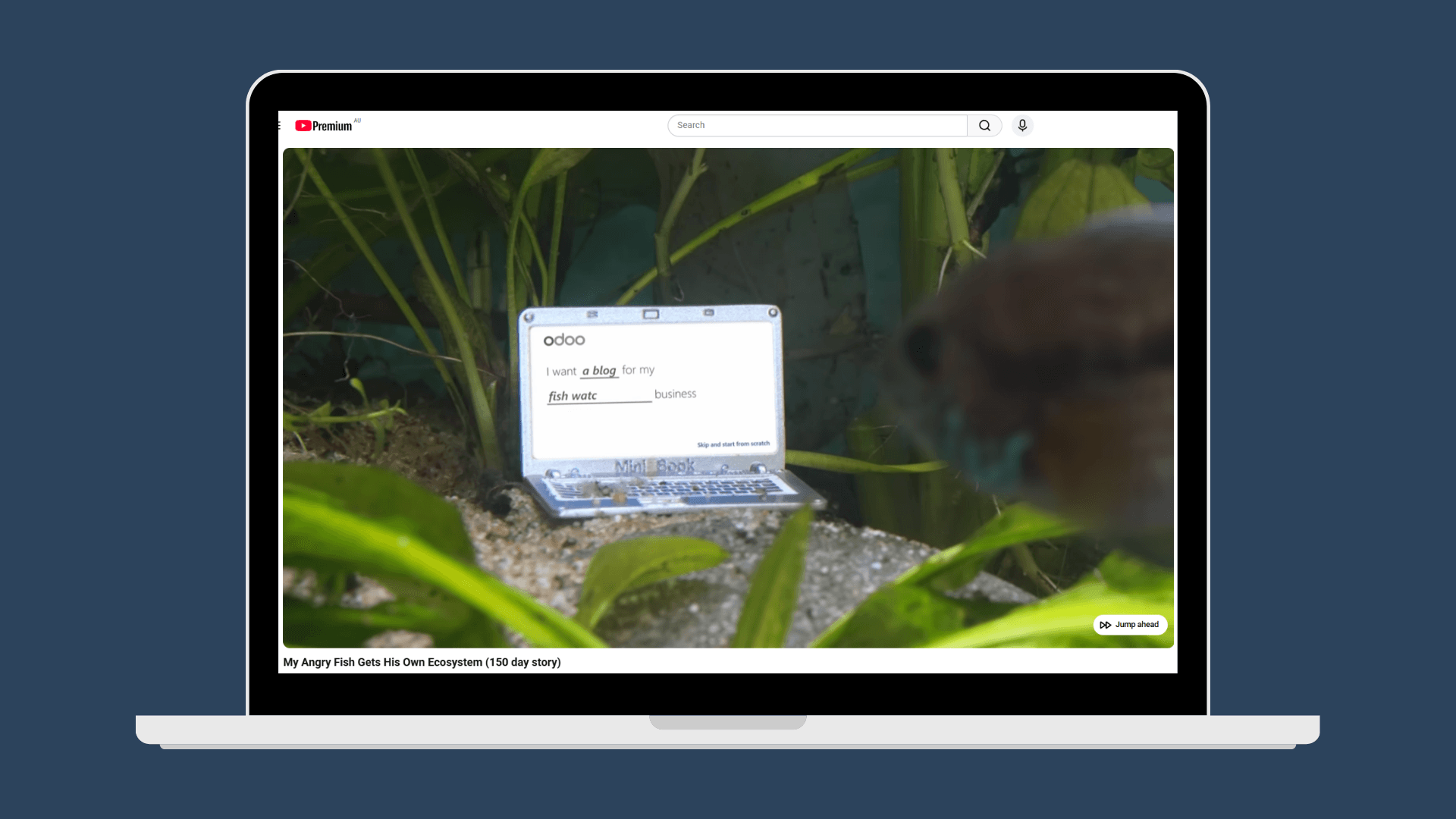
There is no clean skip point. There is no "now a word from our sponsor" moment that cues the audience to reach for the button. If you skip it, you skip part of the video you came to watch.
That is the difference. Not a better script. A fundamentally different relationship between the brand and the content.
What brands and agencies need to change
From where I sit, the brief is the problem.
Most creative briefs for creator partnerships are built around the brand's talking points. Three features to mention. A promo code. A CTA. The creator is treated as a delivery mechanism for a message that was already written before they were involved.
That model is dying. The platform is making sure of it.
If you want integrations that hold up as skipping gets easier, the brief needs to start with a different question. Not "what do we need them to say?" but "how does this product fit into what they already make?" The creator knows their audience better than you do. Briefs that trust that tend to produce better results, not just better content.
A few practical things worth revisiting before your next campaign:
Depth over duration. A 90-second script read that gets skipped delivers nothing. A 30-second moment that's genuinely part of the story delivers everything. Start measuring quality of placement, not length.
Your metrics will lag the reality. Reach and impressions won't show you the skip problem until it's already significant. Attributed traffic, discount codes, and conversions will surface it faster. Build that accountability in now.
Think about who's watching. Creators with long-form, niche content and loyal communities tend to have higher Premium audiences than creators with shorter, broader content. Factor that into your talent selection, not just the demographic breakdown.
The platform doesn't share your interests. YouTube makes more money when someone upgrades to Premium than when they watch ad-supported content. Jump Ahead is a retention feature for YouTube, not a problem they are motivated to solve for creators or brands. Knowing that should change how you plan.
The brief has to change
Standard ad reads made sense when skipping required effort. When it takes one tap, the bar for what earns a viewer's attention moves with it.
The brands that figure this out are going to work differently with creators. Less control over the script, more investment in finding the right talent and giving them a genuine reason to integrate the product. It is a harder brief to write. It is also the only format that works when skipping is this easy.
The ask is no longer "read this." It is "make something with us that people actually want to watch."
Thinking about how platform changes are affecting your media mix? Let's chat.